
By PAUL WHEATON
Keep those branches, twigs, rotten logs, and Christmas trees!
That stuff is gardener’s gold! Organic matter!
Winter is the season for pruning trees. Sometimes taking out dangerous trees. I am mystified when people haul the wood away and in the sping they spend money for mulch.
And equally mystified by people that rent an obnoxious, loud, smelly chipper.
here is a quick list of a dozen things that can be done with that wood, keeping it on your property and not having to fool with a chipper.
1. Make your own mulch: A huge branch can be reduced to flat mulch in about two minutes with a pruner. I usually clip at the bends in the tigs and branches. A huge pile of branches and twigs will become about 30 times smaller in 15 minutes.

2. Cover it in soil to make hugelkultur.
This is best with the logs (green logs work too) and thick branches. This makes for a richer soil that needs less watering. Some people have built tall raised garden beds with this technique and they have a normal garden that doesn’t need water all summer. This is an excellent use for a stump – no need to pull it or grind it, just cover it with soil.
3. In Finland they use small branches and twigs between muddy spots and the house. You can make a muddy spot less muddy, or you can create a place near the house to wipe your feet.
4. Put the wood in a dry place for a while and then use it for firewood.
Rocket stove technology can heat a home with 90% less wood than a conventional wood stove. So little, that many homes are heated with nothing but tree trimmings that come out of a small yard.
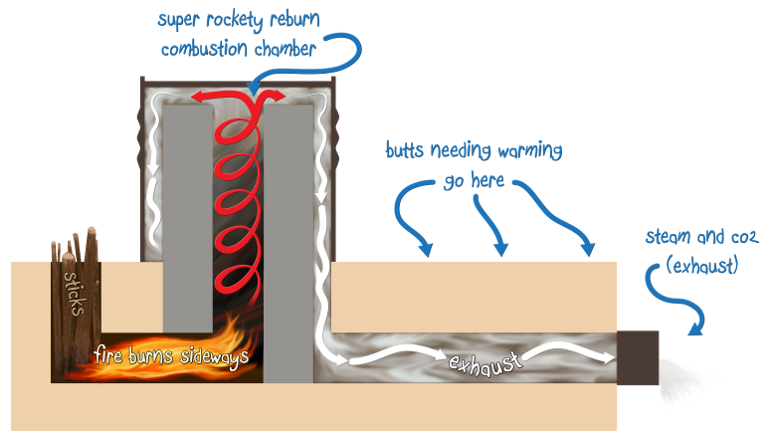
5. If you keep chickens, nothing makes better deep chicken bedding than pine, fir or spruce boughs.
6. Butterfly/bird/wildlife habitat: Just make a big brushpile. This provides habitat for butterflies to lay eggs, and a variety of beneficial insects and other critters. Most permaculture practitioners keep a brushpile somewhere in their yard because they believe that it reduces pest damage for the rest of their garden.
6.1. Snag or stump for wildlife
7. Criss-crossing branches in a compost pile helps to aerate it.
8. With a bit of jute, it’s a snap to make a twig trellis or arbor for your garden. Usually in about ten minutes. And when they get old, you can mulch the branches and the jute together.
9. If you have some wood shop skills, you can make chairs, furniture, name tags, coasters, bird houses, benches, planter box, tool handles, coat racks and so much, much more. And if the wood is living black locust wood, whatever you do with that will last about ten times longer outdoors than cedar without a drop of paint or stain.
10. garden stakes
11. Throwing branches and logs into ponds will usually reduce algae problems and give fish and amphibians a place to hide from predators.
12. marshmallow/hotdog sticks!
A lot of this stuff is effectively sequestering your own carbon! It could be a massive step toward your own personal carbon neutrality.
*******************
 BIO: Paul Wheaton is is the tyrannical ruler of two on-line communities. One is about permaculture and one is about software engineering. There is even one for Missoula. Paul has written several permaculture articles starting with one on lawn care that he presented at the MUD Project 17 years ago, including articles on raising chickens, cast iron and diatomaceous earth. Paul also regularly uploadspermaculture videos and permaculture podcasts. In his spare time, Paul has plans for world domination and is currently shopping for a hollowed out volcano in the Missoula area, with good submarine access.
See all of Paul’s contributions to MakeitMissoula on this Blog Homepage here.